
- 78 Views
- 7 Min Read
- (0) Comment
Climbing Mount Kilimanjaro—the “Roof of Africa” – is a bucket-list adventure that takes you through five distinct climate zones, from tropical rain-forests to arctic-like glacial scree. Since it’s a non-technical trek, you don’t need ropes or crampons, but you do need respect for the altitude.
Mt Kilimanjaro Climb: Your 2026 and 2027 Mountain Climbing Expedition
Mt Kilimanjaro Climb: Your 2026 and 2027 Mountain Climbing Expedition
Mount Kilimanjaro Climbing, Mt Kilimanjaro Trekking, Mt Kilimanjaro Hiking
Mount Kilimanjaro National Park is 128km from Arusha town, which covers an area of 755sq km (about 470sq miles), and Kilimanjaro is the crown of Tanzania. Rising in absolute isolation, at 5895 meters (19,339 feet), Kilimanjaro is Africa’s highest mountain and one of the accessible high summits, a beacon for visitors from all around the world. Most climbers reach the crater rim with little more then a walking stick, proper clothing and determinations. Kilimanjaro can be climbed at any time of the year but the best is considered to be from August-October and January to March. It is wet in the rain-forest during the rains in April, May, June and November. December through to February is the warmest months
At 5895 meters, Mount Kilimanjaro is the highest, as well as the youngest, of the three volcanic peaks of East Africa, Mount Kenya 5,199 m and Elgon 4,321m being the other two. Their oldest lava may be only some one Million years old, and small-scale activities on the Kibo peak has probably taken place within the last couple of hundred years. Kilimanjaro is a “Central Vent” type of Volcano, which gives it an oval shape in plain view. The dimension of its base are about 80 x 48 km, elongated in the East – South – East direction. The older rock of its three main peaks are broadly similar, being mainly trach basalts, dark grey rocks containing lighter colored feldspar crystals. The younger rock of Kibo is, however, of a different composition, and includes nephelirites and nepheline – synites which contain glassy crystals of nepheline.

Here is a comprehensive guide to help you plan your 2026 expedition.
Choosing Your Route – Mount Kilimanjaro
Not all paths to the summit are created equal. Your choice affects your success rate, scenery, and budget.
| Route | Duration | Success Rate | Best For… |
| Lemosho | 7–8 Days | High | Scenery and best acclimatization. |
| Machame | 6–7 Days | High | The “Whiskey Route”—popular and scenic. |
| Northern Circuit | 9 Days | Very High | Remote vibes and the highest success rate. |
| Marangu | 5–6 Days | Low | The “Coca-Cola Route”—only route with huts. |
| Rongai | 6–7 Days | Medium | A quieter approach from the north side. |
Pro Tip: Longer is better. Routes that take 7+ days have significantly higher success rates (over 90%) because they give your body time to adjust to the thinning air.
Best Time to Climb Mt Kilimanjaro
While you can climb year-round, timing your trip with the dry seasons will make for a much more comfortable experience.
- January – March: Clear skies and slightly colder. Great for photography.
- June – October: The primary “high season.” Dry weather and steady temperatures, though trails are busier.
- Avoid April & November: These are the rainy seasons. Trails become muddy, slippery, and visibility can be poor.
Budgeting for 2026/2027
The cost of climbing Kilimanjaro varies based on the level of service and the length of the trek.
- Budget ($1,700 – $2,300): Basic equipment, larger groups, and shared facilities.
- Mid-Range ($2,500 – $4,000): Smaller groups, better food, and higher safety standards (recommended).
- Luxury ($5,000+): Private toilets, walk-in tents, and extra-thick mattresses.
Additional Costs to Remember:
- Tipping: It is customary to tip your crew. Budget $250–$400 per climber for the entire team (guides, porters, and cooks).
- Visas: $100 for US citizens; $50 for most others.
- Gear Rental: If you don’t want to buy a -20°C sleeping bag, you can rent one in Moshi for about $30–$50.
Essential Gear Checklist For Mount Kili Climbs
The “Summit Night” temperature can drop to -20°C (-4°F), while the base can be a humid 30°C (86°F). Layering is your best friend.
- Footwear: Sturdy, waterproof hiking boots (broken in!) and high-quality wool socks.
- Clothing: Moisture-wicking base layers, a heavy down jacket, and waterproof outer shells (Gore-Tex).
- Accessories: A high-quality headlamp (with extra batteries), polarized sunglasses, and a 4-season sleeping bag.
- Health: High-altitude sunblock, lip balm, and a basic first-aid kit with blister pads.
Staying Safe: The “Pole Pole” Philosophy
The secret to reaching Uhuru Peak isn’t speed; it’s “Pole Pole” (Swahili for “slowly, slowly”).
- Hydration: Drink 3–4 liters of water every day.
- Altitude Sickness (AMS): Most climbers feel mild symptoms (headache, nausea). Talk to your doctor about Diamox to help with acclimatization.
- Daily Health Checks: Reputable operators will check your heart rate and oxygen saturation ($SpO_2$) twice a day using a pulse oximeter.
- Listen to Your Body: If symptoms become severe (confusion, extreme shortness of breath), the only cure is immediate descent.
Mt Kilimanjaro Climbing
A 7-day itinerary on the Machame Route (often called the “Whiskey Route”) is widely considered the gold standard for Kilimanjaro. It follows the “walk high, sleep low” principle, which is the best way to prevent altitude sickness and ensure you actually reach the summit.
Below is one of our standard itinerary for climbing Mount Kilimanjaro on the picturesque Machame Route. The pricing of this program depends on the type of accommodation at the base of the mountain and the length of time spent on acclimatization.
7-Day Machame Route Itinerary
Day 1: The Rain-forest Trek
- Route: Machame Gate (1,800m) to Machame Camp (2,835m)
- Hiking Time: 5–7 hours | Distance: 11 km
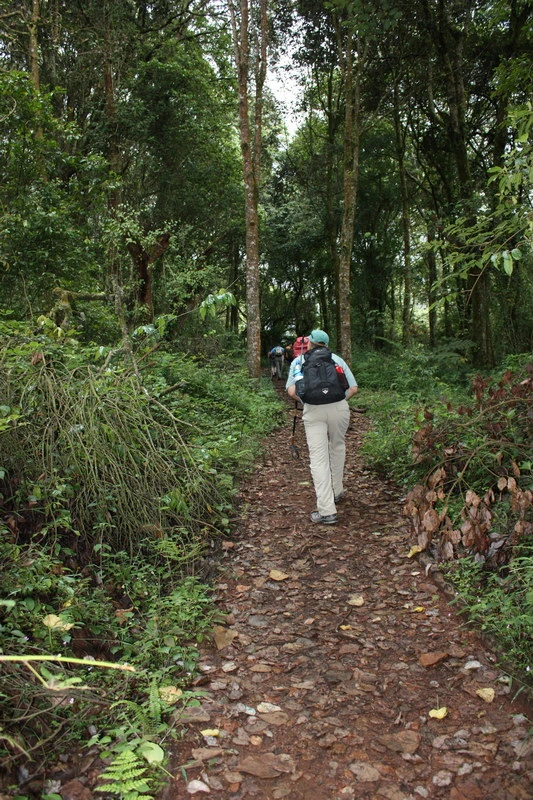
- The Experience: You’ll begin in the lush, humid montane forest. Expect deep greenery, ancient trees draped in moss, and the occasional Blue Monkey sighting. The trail can be muddy, so gaiters are a must.
Day 2: Into the Moorland
- Route: Machame Camp (2,835m) to Shira 2 Camp (3,850m)
- Hiking Time: 4–6 hours | Distance: 5 km
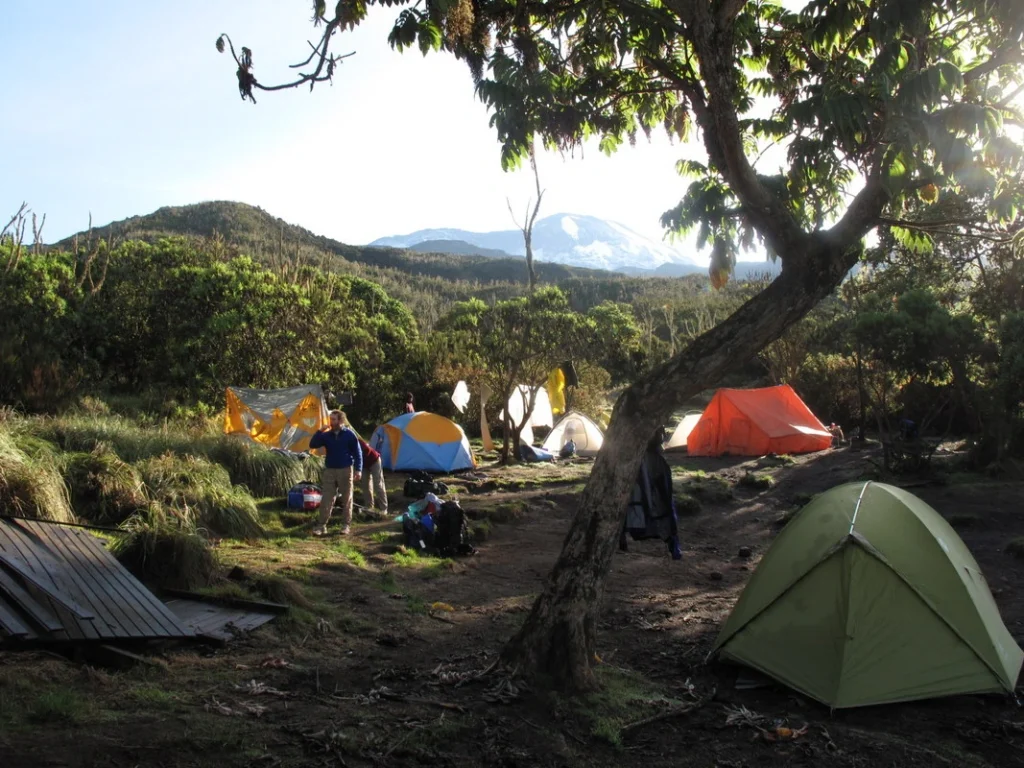
- The Experience: The forest thins out into the “Heath Zone.” It’s a steeper climb today as you ascend onto the Shira Plateau. You’ll get your first clear views of the Kibo peak (the summit) in the distance.
Day 3: The Acclimatization Key (Walk High, Sleep Low)
- Route: Shira 2 Camp to Lava Tower (4,600m) then down to Barranco Camp (3,900m)
- Hiking Time: 6–8 hours | Distance: 10 km
- The Experience: This is a tough but vital day. You climb up to the massive volcanic “Lava Tower” for lunch at high altitude, then descend back down to sleep. This “peaks” your body’s red blood cell production.
Day 4: The Great Barranco Wall
- Route: Barranco Camp (3,900m) to Karanga Camp (3,995m)
- Hiking Time: 4–5 hours | Distance: 5 km
- The Experience: You start the morning by “scrambling” up the near-vertical Barranco Wall. It looks intimidating, but it’s non-technical and incredibly fun. You’ll end the day with stunning views of the southern glaciers.
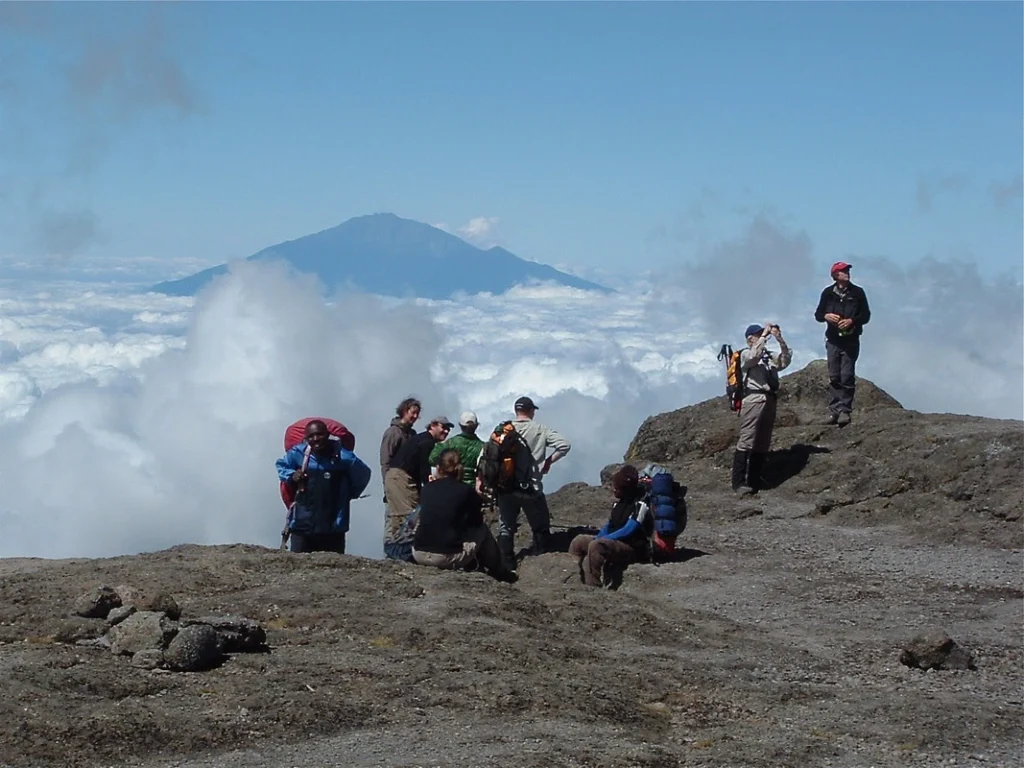
Day 5: The Final Push Base
- Route: Karanga Camp (3,995m) to Barafu Camp (4,673m)
- Hiking Time: 3–4 hours | Distance: 4 km
- The Experience: A short, steep hike through a desolate alpine desert. You arrive at “Base Camp” early. The afternoon is for resting, hydrating, and mentally preparing. You’ll go to bed at 7:00 PM because “Summit Night” starts at midnight.
Day 6: Summit Night and Uhuru Peak
- Route: Barafu Camp to Uhuru Peak (5,895m) then down to Mweka Camp (3,100m)
- Hiking Time: 12–15 hours | Distance: 15 km
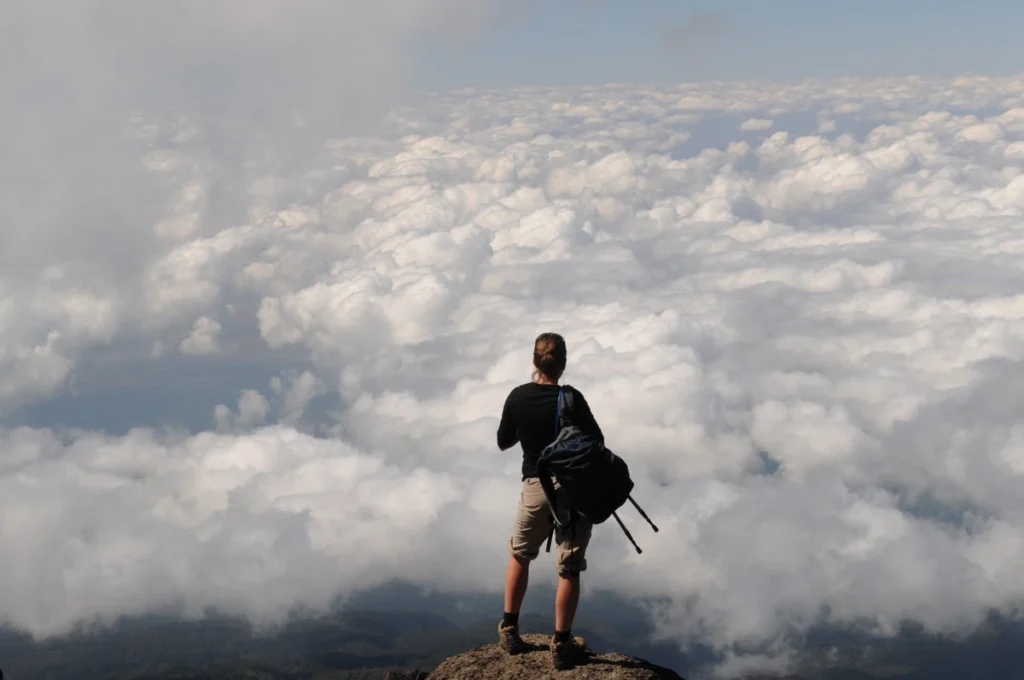
- The Experience: The hardest day of your life. You climb in the dark with headlamps, battling freezing wind and thin air. You reach the crater rim at Stella Point just as the sun rises, then push for the final hour to Uhuru Peak. After the celebration, you descend all the way back down to the forest line.
Day 7: The Victory Lap
- Route: Mweka Camp (3,100m) to Mweka Gate (1,640m)
- Hiking Time: 3–4 hours | Distance: 10 km
- The Experience: A gentle descent back through the rain-forest. At the gate, you’ll sign the official logbook and receive your gold certificate. Your knees will be tired, but the beer at the bottom will be the best one you’ve ever had.
- Quick Summary of the Machame Route Hike:
- Total Distance: ~62 km (38 miles)
- Highest Point: Uhuru Peak (5,895m / 19,341 ft)
- Difficulty: Strenuous (High fitness required)